Packaging Products
Date
Nov. 15, 2026, 4:54 p.m.
Categories
Packaging Products: Types, Materials, Uses, and How to Choose the Right Packaging Solution
Packaging Products: Types, Materials, Uses, and How to Choose the Right Packaging Solution
Packaging products play an important role in modern businesses, manufacturing, retail, and logistics. They help protect goods, maintain product quality, simplify storage, and ensure safe transportation. From plastic bags and wrapping films to protective packaging and industrial packaging materials, different products are designed to meet specific packaging requirements.
Choosing the right packaging solution can reduce product damage, improve operational efficiency, and create a better experience for customers.
In this guide, we explore the main types of packaging products, their materials, applications, and the factors businesses should consider when selecting packaging solutions.
1. What Are Packaging Products?
Packaging products are materials and items used to contain, protect, store, handle, and transport goods. They can be made from different materials, including plastic, paper, cardboard, metal, and flexible polymers.
Depending on their purpose, packaging products can be used for primary packaging, secondary packaging, or tertiary packaging.
-
Primary Packaging: Directly surrounds or contains the product, such as plastic pouches, bottles, and food packaging films.
-
Secondary Packaging: Groups individual products together, such as cartons, boxes, and multipack wraps.
-
Tertiary Packaging: Protects larger quantities of goods during storage and transportation, such as pallet wraps, stretch films, and protective covers.
Each packaging level contributes to product protection and supply chain efficiency.
2. Main Types of Packaging Products
There are many packaging products available for different industries. Some of the most commonly used options include:
Plastic Packaging Bags
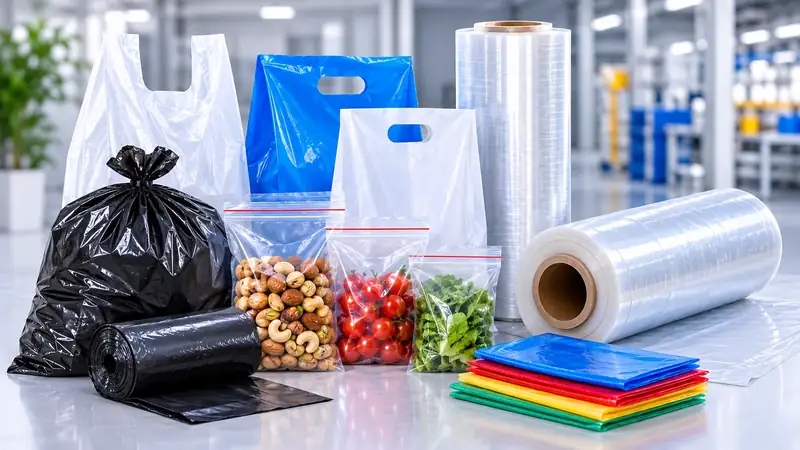
Plastic packaging bags are widely used in retail, manufacturing, food packaging, and transportation. They are available in different sizes, thicknesses, and designs to accommodate various products.
Common types include:
-
Polyethylene (PE) bags
-
Polypropylene (PP) bags
-
Ziplock bags
-
Shopping bags
-
Garbage bags
-
Industrial packaging bags
These products are valued for their flexibility, lightweight construction, and moisture resistance.
Stretch Film
Stretch film is a flexible plastic material used to wrap products and secure loads, particularly on pallets. It stretches around products and maintains tension to keep items stable during transportation and storage.
Common applications include:
-
Securing palletized goods
-
Protecting products from dust and moisture
-
Bundling multiple items
-
Stabilizing warehouse shipments
Stretch film is commonly used in warehouses, distribution centers, and manufacturing facilities.
Shrink Film
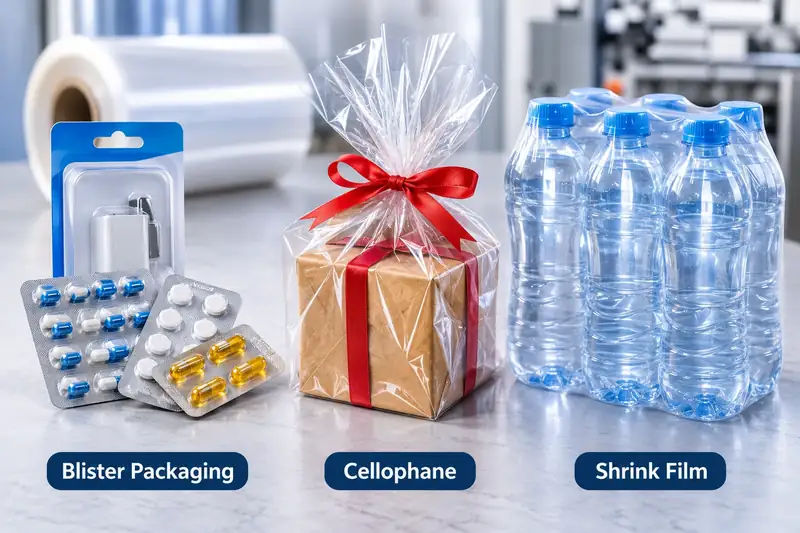
Shrink film is a plastic film that contracts when exposed to heat, creating a tight covering around a product or group of products.
It is commonly used for:
-
Beverage multipacks
-
Consumer goods
-
Food packaging
-
Electronic products
-
Industrial packaging
Shrink film offers a neat appearance and helps protect products against dust and external contamination.
Protective Packaging Materials
Protective packaging products are designed to minimize damage during handling, storage, and transportation.
Common examples include:
-
Bubble wrap
-
Foam sheets
-
Protective plastic covers
-
Air cushion packaging
-
Corner protectors
-
Corrugated cardboard
These materials are particularly useful for fragile, sensitive, and valuable products.
Packaging Tapes
Packaging tapes are used to seal cartons, secure packages, and reinforce packaging materials.
Common types include:
-
BOPP packing tape
-
PVC packaging tape
-
Double-sided tape
-
Printed packaging tape
-
Heavy-duty industrial tape
The right tape depends on the package weight, surface material, storage conditions, and transportation requirements.
3. Common Materials Used in Packaging Products
The performance of packaging products depends largely on the materials used in their production.
| Material | Main Characteristics | Common Applications |
|---|---|---|
| Polyethylene (PE) | Flexible, lightweight, and moisture-resistant | Plastic bags and films |
| Polypropylene (PP) | Lightweight, strong, and versatile | Packaging bags and wrapping |
| PET | Strong, transparent, and dimensionally stable | Bottles and packaging trays |
| PVC | Flexible or rigid depending on formulation | Shrink films and blister packaging |
| Paper | Printable and widely recyclable | Paper bags and cartons |
| Cardboard | Rigid and suitable for cushioning and protection | Shipping boxes and cartons |
Selecting the appropriate material depends on the product's physical properties, protection requirements, and intended packaging application.
4. Why Are Quality Packaging Products Important?
Packaging is more than simply covering a product. It is an important part of the production and distribution process.
High-quality packaging products offer several advantages:
Product Protection: Packaging helps protect goods against dust, moisture, scratches, and physical damage.
Safe Transportation: Proper packaging keeps products secure during handling, loading, and shipping.
Storage Efficiency: Suitable packaging materials make products easier to organize, stack, and store.
Cost Management: Choosing appropriate materials can reduce product losses, packaging waste, and transportation expenses.
Professional Presentation: Well-designed packaging improves product appearance and helps businesses create a consistent brand image.
Operational Efficiency: Reliable packaging materials can simplify packing processes and improve productivity.
5. How to Choose the Right Packaging Products
Choosing the right packaging solution requires considering several factors.
Product Characteristics
Consider the product's size, weight, shape, fragility, and sensitivity to environmental conditions. Heavy products may require stronger packaging, while fragile items need additional protective materials.
Protection Requirements
Determine what type of protection is necessary. Some products need moisture resistance, while others require cushioning, sealing, or protection against dust and contamination.
Packaging Material
Select a material that matches the product's requirements and the intended packaging process. Plastic films, paper-based materials, and rigid packaging each offer different advantages.
Transportation and Storage
Consider how products will be handled, stored, and transported. Packaging for long-distance shipping may require additional strength and protection compared with packaging intended for local retail distribution.
Budget and Production Volume
Packaging costs should be evaluated alongside material performance, labor requirements, and production efficiency. Buying suitable packaging materials in appropriate quantities can help businesses manage costs.
Sustainability
Businesses should also consider recyclable materials, recycled content, reusable packaging, and opportunities to reduce unnecessary packaging material.
6. Packaging Products for Different Industries
Different industries have different packaging requirements.
| Industry | Common Packaging Products |
|---|---|
| Food and Beverage | Food-grade films, plastic bags, shrink film |
| Retail | Shopping bags, wrapping films, packaging boxes |
| Manufacturing | Industrial bags, stretch film, protective covers |
| E-commerce | Shipping bags, bubble wrap, packing tape |
| Pharmaceuticals | Blister packs, sealed packaging, protective films |
| Logistics and Warehousing | Pallet wrap, stretch film, strapping materials |
Understanding industry-specific requirements helps businesses select packaging solutions that support product safety and operational performance.
7. The Future of Packaging Products
The packaging industry continues to evolve as businesses look for more efficient and environmentally responsible solutions.
Several developments are shaping the future of packaging:
-
Recyclable Materials: Greater interest in materials that can be collected and processed through appropriate recycling systems.
-
Lightweight Packaging: Reducing material consumption while maintaining the required strength and protection.
-
Reusable Packaging: Developing packaging systems that can be used multiple times.
-
Advanced Manufacturing: Improving production processes to achieve better material performance and consistency.
-
Smart Packaging: Using technologies such as tracking systems and smart labels to improve supply chain visibility.
These developments are encouraging businesses to reconsider packaging choices and focus on long-term efficiency and sustainability.
Conclusion
Packaging products are essential for protecting goods, improving storage, and supporting efficient transportation across different industries. From plastic bags and stretch films to shrink packaging, protective materials, and packaging tapes, each product serves a specific purpose.
The best packaging solution depends on the product, required protection, transportation conditions, material properties, and business budget.
By understanding the different types of packaging products and their applications, businesses can make informed decisions, reduce product damage, and improve their overall packaging operations.